
Phone Cases for Construction Workers
Find the best phone cases for construction workers. Our guide covers MIL-STD ratings, dust proofing, and top picks for standard and foldable phones.
 Editorial
The best phone cases for construction workers aren't just accessories; they're essential gear. Look for cases that promise military-grade drop protection, IP68 dust and water resistance, and a secure, non-slip grip. These aren't just fancy features—they're the bare minimum for protecting your phone from the brutal reality of a job site.
Why Your Phone Needs a Hard Hat on the Job Site
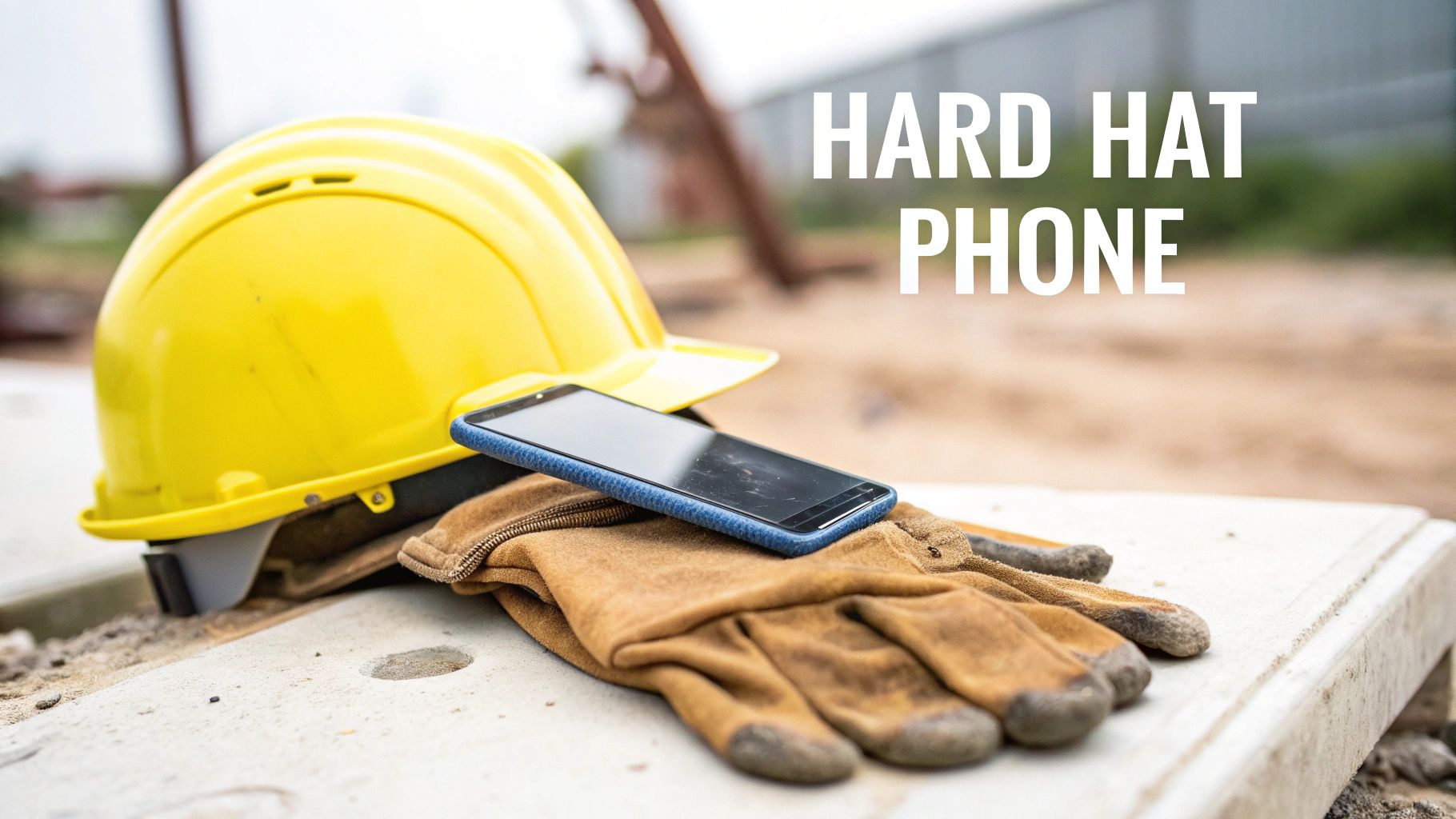
Think about it. You wouldn't walk onto a site without a hard hat or steel-toed boots, right? So why leave your most critical communication tool completely exposed? A standard phone case in this environment is like wearing flip-flops to a demolition—it’s just not going to cut it.
Your smartphone is a vital piece of equipment now. In fact, a staggering 92% of construction professionals use one every day for everything from pulling up blueprints to logging their hours. But that heavy use puts these expensive devices right in the line of fire. One report found that over a third of all phones get damaged during use, a risk that skyrockets when you're dealing with the dust, drops, and constant impacts of a construction zone.
Core Protective Features Explained
Picking the right case is about understanding what real protection actually looks like. It’s more than surviving a single fall. It’s about enduring the daily grind of a harsh environment day after day. Just like adhering to OSHA compliant safety measures for the site itself, protecting your personal equipment is part of the job.
A truly rugged case is built with a specific set of features designed to handle those threats. It's basically specialized personal protective equipment (PPE) for your phone.
A construction-grade phone case does more than just prevent cracks. It ensures your digital lifeline remains operational by sealing it off from the fine dust and moisture that can cause silent, irreversible damage to internal components.
To make your search easier, we've broken down the absolute must-have features. Each one plays a critical role in giving your phone the defense it needs to keep working. And if you're looking for the toughest of the tough, our guide to the https://www.foldifycase.com/blogs/news/best-heavy-duty-phone-cases has even more specialized options.
To simplify what to look for, this table breaks down the essentials.
Essential Features in a Construction Phone Case
| Feature | Why It Matters on a Construction Site | What to Look For |
|---|---|---|
| Drop Protection | Protects against falls from ladders, scaffolding, or vehicles onto hard surfaces like concrete. | MIL-STD-810G certification; reinforced corners; shock-absorbing materials. |
| Dust & Water Resistance | Prevents fine particles (sawdust, concrete dust) and moisture from damaging ports and speakers. | An IP68 rating or higher; sealed port covers for charging and headphone jacks. |
| Enhanced Grip | Reduces the chance of accidental slips, especially when wearing gloves or in wet conditions. | Textured surfaces; rubberized materials; ergonomic design. |
These three features form the foundation of a truly protective case. Without them, you're just gambling with a very expensive and important tool.
Decoding Military-Grade Drop Protection
You’ve seen it plastered on just about every tough-looking phone case out there: “military-grade protection.” It sounds impressive, but what does it actually mean when your phone is rattling around in a toolbox or taking a tumble on a chaotic job site?
Thankfully, it's not just some marketing gimmick. The term points to a specific standard, a gauntlet of grueling tests a case has to survive to prove its salt.
Think of it like a crash-test rating for a truck. A five-star rating doesn't just mean a vehicle is "safe"—it means it performed exceptionally well under very specific, controlled, and punishing conditions. The same idea applies to phone cases certified under MIL-STD-810G or the newer MIL-STD-810H.
This standard, originally designed by the U.S. Department of Defense for military gear, is your first clue that a case is built for more than just slipping off a coffee table. It's a real benchmark for durability in environments that are anything but gentle.
What the Military Standard Really Tests
Here’s the catch: the MIL-STD-810 standard covers dozens of different tests, and a manufacturer can claim "military-grade" status by passing just one of them. That's why you need to know which specific tests actually matter for a construction site.
When you're looking for a case that can truly hang with the pros, three tests are non-negotiable. They simulate the exact hazards your phone faces daily, from accidental drops to the constant rumble of heavy machinery.
- Method 516.6 - Shock (The Drop Test): This is the big one. The test involves dropping the phone in its case from a specific height—usually four feet—onto a hard surface like concrete-backed steel. To pass, the device has to survive 26 drops hitting every face, edge, and corner and still be fully functional.
- Method 510.5 - Sand and Dust: This one’s critical for any job site. The test blasts the case with fine, blowing particles to see if it can keep them out. Think sawdust, drywall dust, and dirt that would otherwise work its way into your charging port or hinge mechanism and cause serious damage.
- Method 514.6 - Vibration: This test shakes the case at different frequencies, mimicking the constant jarring it would experience riding on the dash of a work truck or sitting next to a generator. It ensures the case itself won't rattle apart over time.
Knowing about these specific tests lets you look past the vague "military-grade" sticker and ask the right question: what has this case actually been proven to handle?
Translating Lab Tests to Job Site Reality
So, how does surviving a controlled lab test translate to surviving a Tuesday on site? It all comes down to confidence. A case that has passed the Method 516.6 drop test gives you a much higher degree of certainty that it will survive a fall from your tool belt or off a short ladder.
Picture this: your phone vibrates off a workbench next to a running compressor. The vibration resistance (Method 514.6) means the case’s parts won't loosen or fail, while the drop protection (Method 516.6) is what saves it when it hits the concrete floor.
MIL-STD-810 certification isn't a guarantee of total invincibility. It's a documented report card. It proves a case can handle specific, repeatable, and punishing conditions that are a dead ringer for the hazards you face in construction.
When you're comparing cases, look for brands that are upfront about which tests they've passed. A company that proudly states its case is certified for drop, dust, and vibration is making a much stronger promise than one just using a generic tough-guy label. That level of detail is what separates a fashion accessory from a piece of professional-grade gear.
Protecting Your Phone From Dust, Debris, and Water
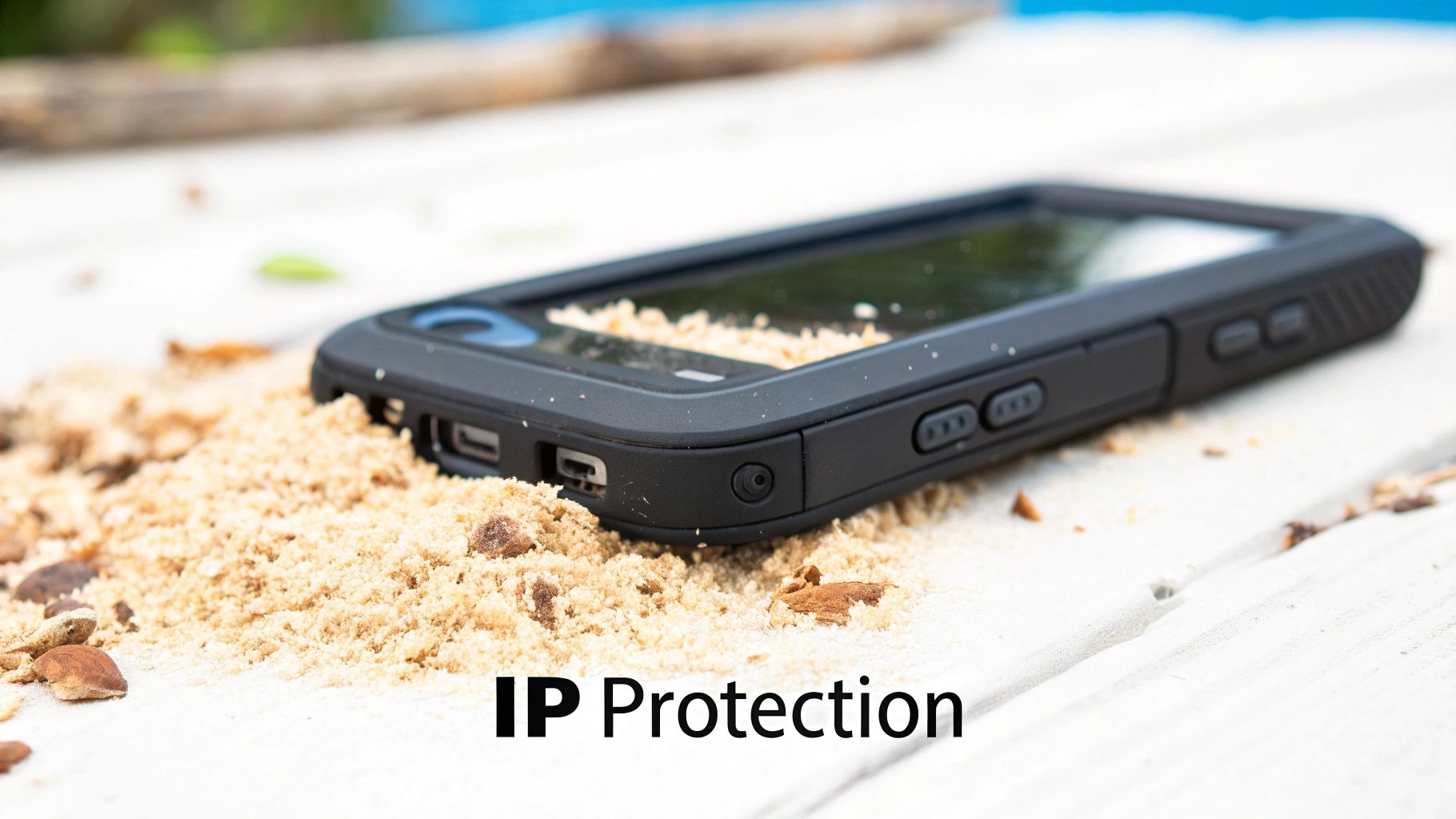
A sudden drop from a ladder gets all the attention, but on a job site, a much quieter killer is always in the air. Fine particles of dust, dirt, and moisture are constantly trying to worm their way inside your phone, ready to cause slow, grinding, and irreversible damage.
This is where a case's Ingress Protection (IP) rating becomes one of the most critical specs you can check. It’s a simple, two-digit code that tells you exactly how well a case seals your phone off from the elements.
Think of an IP-rated case as a vault for your phone. Its only job is to create an impenetrable barrier between the delicate electronics inside and the harsh world outside. The higher the numbers, the tougher the vault.
Breaking Down the IP Rating Code
The IP system is refreshingly simple once you know what the numbers mean. Each digit has a specific job, and for a construction environment, you need to pay close attention to both.
- The First Digit (Solids): This number, from 0 to 6, measures protection against solid stuff like dust and grit. On a job site, this is the number that matters most. A rating of 6 is the highest you can get, meaning the case is completely dust-tight. No exceptions.
- The Second Digit (Liquids): This digit, from 0 to 9, tells you how well the case handles water. A rating of 8 means it can survive being continuously submerged in water, usually at least a meter deep, under conditions set by the manufacturer.
An IP68 rating is the gold standard for any truly rugged case. It promises your phone is completely sealed against fine dust and can handle getting seriously wet, making it perfect for the unpredictable conditions you face every day.
Why Dust Protection Is Your Top Priority
On a construction site, your biggest enemy isn't a deep puddle—it's the constant storm of tiny particles. Sawdust, concrete dust, and metal shavings are like tiny abrasive assassins for your phone.
These particles can easily work their way into an unprotected charging port, speaker grill, or microphone. Once they're inside, they short out connections, muffle audio, and scratch internal components, leading to a slow, frustrating, and expensive failure.
For anyone on a job site, that first digit in the IP rating is non-negotiable. A case without a dust-tight seal (IP6X) is leaving your phone’s most vulnerable entry points wide open to the single biggest environmental threat you face.
This is exactly why features like sealed port covers are so essential. They act as the final gatekeepers, providing a physical plug that stops debris dead in its tracks. To see why this matters so much, check out our deep dive into the benefits of a phone case with port covers.
With construction tech booming, this level of protection has never been more vital. A staggering 90.9% of workers now use their smartphones daily for everything from viewing plans to managing payroll. Device failure simply isn't an option. Yet, the phone damage rate on-site remains stubbornly high at over 33%—a problem fueled directly by hazards like dust and debris. The best cases have to address this threat head-on with a superior IP rating.
Specialized Protection for Foldable Phones
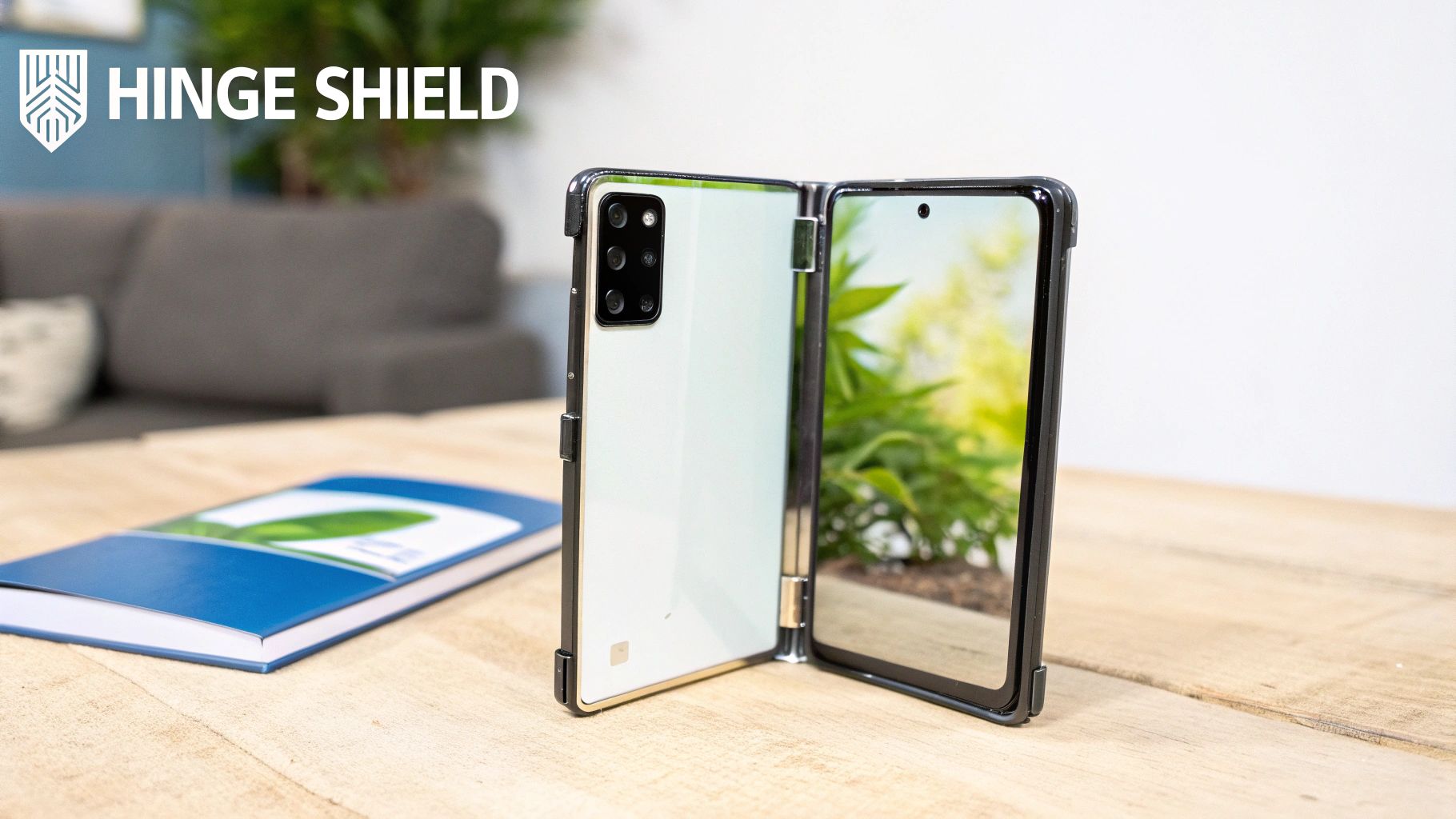
Foldable phones like the Samsung Galaxy Z Fold and Google Pixel Fold are becoming absolute game-changers on the job site. Spreading out a blueprint on that massive screen is a huge advantage. But that incredible tech has an Achilles' heel, and it’s a big one: the hinge. A standard tough case just isn't built to protect this complex, moving part.
Think of your foldable phone like a brand-new hardcover book. The front and back covers are solid, but the whole thing relies on its spine. If that spine gets jammed with dirt or takes a hard knock, the book is toast. Your phone's hinge is exactly the same—it's the single most critical and most exposed component you have.
A generic case leaves that intricate mechanism wide open to everything a construction site throws at it. Dust, metal shavings, and concrete grit can work their way into the gears, grinding them down and leading to a complete, catastrophic failure. This is why specialized protection isn’t a nice-to-have; it's a must.
Beyond Standard Rugged Designs
To properly guard a foldable phone in a place like a construction site, the case has to be engineered from the ground up with that unique shape in mind. This means going way beyond simple drop protection and focusing on the specific weak points of a folding screen and its all-important hinge.
The best phone cases for construction workers using foldables bring a few key innovations to the table that you just won't find in a standard case. These features are designed to give you true 360-degree protection without getting in the way of the phone’s main feature.
- Dedicated Hinge Protection: This is non-negotiable. Look for cases that have a tough, articulating cover that shields the entire length of the hinge when the phone is closed. It acts as a physical barrier, stopping debris from ever reaching the sensitive moving parts inside.
- Reinforced Corners: Foldables are heavy, which means they hit the ground harder, especially on the corners. The best cases have multi-layered, shock-absorbing corners that soak up impact forces without messing with the folding action.
- Raised Screen Bezels: A quality foldable case needs pronounced raised edges around both the outer front screen and the big inner one. This small detail ensures neither screen makes direct contact with a flat surface during a fall.
These pieces all work together to build a complete defense system. Without them, you're leaving the most expensive part of your device dangerously exposed.
Comparing Rugged Foldable Case Collections
When you're dealing with the unique challenges of a foldable phone on a tough job site, not all "rugged" cases are created equal. Different collections are built with specific priorities in mind, from all-out armor to a balance of toughness and usability.
Here’s a quick look at how some of FoldifyCase's top collections stack up for construction environments, focusing on the features that matter most for a foldable device.
| Case Collection | Key Protective Feature | Best For | Foldable Device Compatibility |
|---|---|---|---|
| ArmorGuard Series | 360° Sliding Hinge Shield | Maximum protection against dust, debris, and high drops. | Samsung Z Fold Series, Google Pixel Fold |
| ToughShield Pro | Integrated Kickstand & Hinge Cover | Users who need durability plus functionality for viewing plans. | Samsung Z Fold Series, Google Pixel Fold |
| Magsafe Defender | Magnetic Hinge Cover & Magsafe Ring | Workers who use magnetic mounts in their vehicles or on site. | Samsung Z Fold Series |
| SlimArmor Hinge | Minimalist Profile with Hinge Guard | Supervisors or workers in lower-risk areas needing basic protection. | Samsung Z Fold Series, Google Pixel Fold |
Choosing the right collection comes down to your specific daily risks. The ArmorGuard is built for the front lines, while the Magsafe Defender offers a great blend of protection and modern convenience for those moving between the site and the truck.
Functionality Meets Fortification
Picking a case for a foldable phone is all about finding that sweet spot. You need hardcore protection that doesn't kill the very reason you bought the device—its ability to open up into a big, beautiful display.
A well-designed case should feel like a part of the phone. The hinge cover needs to move smoothly as you open and close it, never catching or adding resistance. This guarantees you can still snap your phone open to see a plan and snap it shut to protect it in seconds. For a deeper dive, you can learn why your foldable phone needs foldable protection in our detailed guide.
On a construction site, protecting a foldable phone's hinge is as vital as protecting a crane's main pivot joint. If that single point of failure is compromised by dirt or damage, the entire piece of equipment ceases to function as intended.
Ultimately, you're looking to fortify your phone against job-site hazards without turning it into a clunky brick. Modern materials and smart engineering make it possible to get military-grade drop ratings and solid hinge coverage in a design that still feels good in your hand. When you're making your choice, always put a case that specifically calls out its hinge protection technology at the top of your list.
Choosing a Case That Improves Your On-Site Workflow
A truly great phone case does more than just survive a fall—it makes your entire workday smoother and safer. The best cases for construction workers are designed to be an extension of their toolkit, not another piece of gear that gets in the way. It’s all about turning your phone into a more secure, accessible, and genuinely useful tool on the job.
It starts with something as basic as grip. A slick plastic case is just an accident waiting to happen, especially when you're wearing thick work gloves or your hands are slick with sweat or rain. A case with textured sides, rubberized edges, or an ergonomic shape gives you the solid hold you need, whether you're climbing a ladder or operating machinery.
Hands-Free Accessibility on the Job
On a busy site, your hands are your most valuable asset. You often need to glance at a blueprint or answer a call, but you can't always stop what you're doing to fish your phone out of a pocket. This is where those smart, workflow-enhancing features become absolutely essential.
Look for cases that build practical carrying solutions right into their design. These small additions can make a huge difference in your daily efficiency and, more importantly, your safety.
- Integrated Belt Clips and Holsters: A sturdy, rotating belt clip keeps your phone securely on your hip. This gives you instant one-handed access without ever having to take your eyes off the task at hand.
- Lanyard Attachments: For anyone working at heights, a lanyard attachment point is non-negotiable. It’s a simple feature that provides a crucial tether, preventing a dropped phone from becoming a dangerous falling object.
These features ensure your phone is always within reach but never in your hands when it shouldn't be.
A phone case with a reliable belt clip or lanyard attachment transforms the device from a pocket liability into a secure, accessible tool. It’s the difference between fumbling for your phone on scaffolding and having it safely at your side, ready when you need it.
Seamless Integration with Your Gear
Your phone case shouldn't create new problems. If a case is a pain to use, you'll end up taking it off, which defeats the whole purpose. That’s why compatibility with your other essential accessories is a key part of an efficient workflow. Before you buy, think about how it will work with your other gear.
Consider its compatibility with vehicle mounts for your work truck or heavy equipment. A case with built-in magnets or a dedicated mounting system allows for secure, hands-free navigation and communication while driving. And don't forget wireless charging—fumbling with port covers every single night just to charge your phone gets old fast.
An efficient workflow is everything in construction, and having a rugged case that supports easy communication and access to job data aligns with key field service management best practices for contractors. Today’s job sites are digital hubs. A 2020 report noted that 22% of workers were already using six or more construction-specific apps. With so much critical information—from daily reports on Procore to safety alerts—flowing through your device, a case that makes accessing it easier and safer is a direct boost to your productivity. You can find more insights on how construction workers use apps on Construction Dive.
A Final Checklist for Your Next Rugged Phone Case
Alright, you’ve done the research. You know what separates a true job-site defender from a cheap plastic shell. But making that final call on a piece of gear this important requires one last inspection.
Think of this as your pre-purchase walkthrough. This simple checklist boils everything down into a few critical questions to ask before you buy. Answering these will confirm whether a case is truly ready for the grind of your daily work, protecting your investment and keeping you connected when it counts.
Key Questions to Ask Yourself
Before you even think about hitting that "add to cart" button, run your choice through this quick evaluation. A solid "yes" to these questions means you're getting protection that won’t let you down.
-
Is it MIL-STD-810G certified? Don't get fooled by vague terms like "tough" or "shockproof." Demand proof. A verified military standard certification for drops (Method 516.6) is non-negotiable. It means the case has actually survived repeated falls onto concrete.
-
Does it have a high IP rating? Dust is the silent killer of electronics on a job site. An IP68 rating is your best defense, guaranteeing the case is completely sealed against fine particles like sawdust and concrete dust while also handling serious water exposure.
-
Are the ports fully covered? Look closely at the charging port and headphone jack. Are there snug-fitting, integrated covers? These are the main doorways for debris that will cause permanent damage over time.
This decision path chart helps visualize how your specific needs—like whether you wear gloves all day or work at heights—should guide your feature priorities.
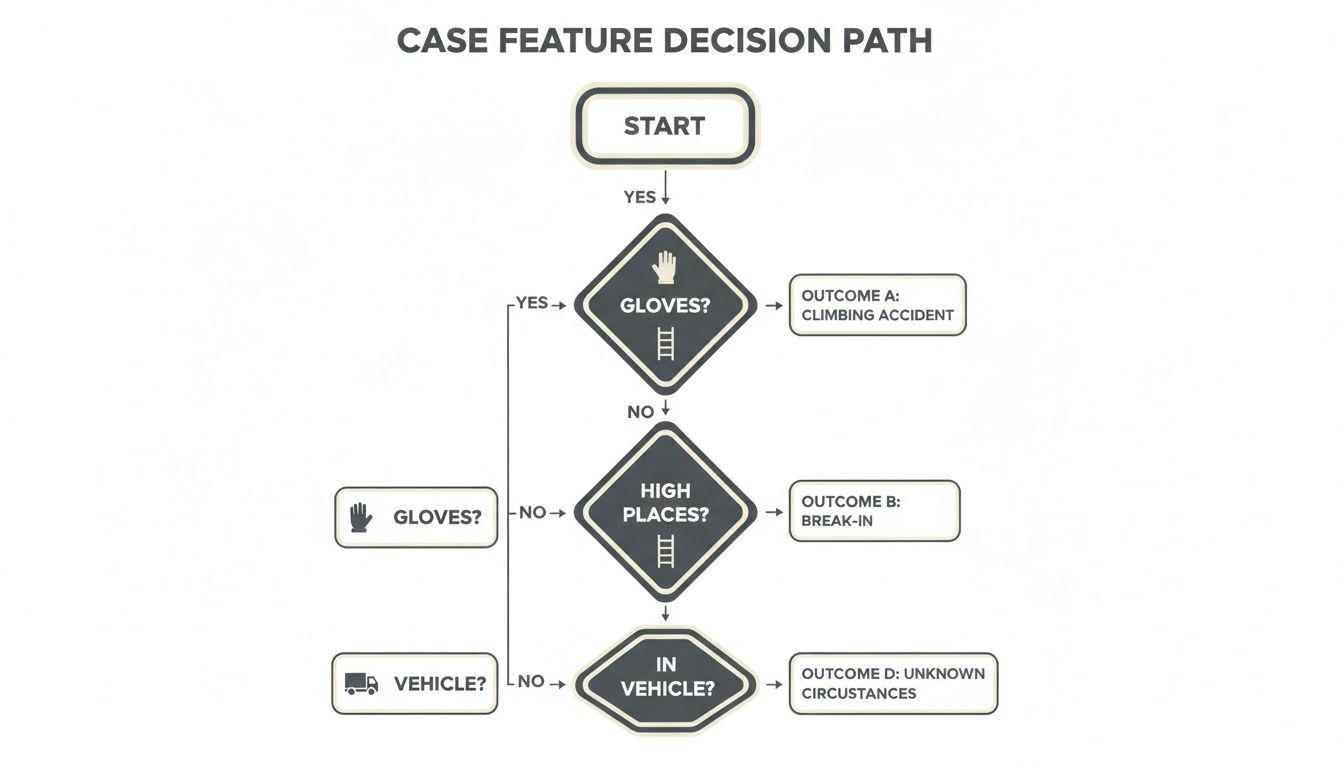
As you can see, someone who needs to use their phone in a truck mount has different priorities than someone who needs a rock-solid grip while wearing thick work gloves.
Specialized Considerations for Your Device
Your specific phone and how you use it every day also play a massive role. Standard protection just doesn't cut it anymore, especially with today's advanced (and fragile) devices.
Your phone case is a piece of personal protective equipment (PPE). Just as you wouldn't use a cracked hard hat, don't rely on a case that fails to meet the specific safety and functional demands of your role.
Finally, run through these last few questions to make sure you've found the perfect fit:
-
For Foldable Phones: Does it offer dedicated hinge protection? This is the absolute most critical feature for a device like a Galaxy Z Fold. A case without a tough, debris-blocking hinge shield leaves your phone’s most complex moving part dangerously exposed.
-
Does it improve your workflow? A good case shouldn't get in your way. Think about features like a secure belt clip, lanyard attachment points, or compatibility with vehicle mounts. The right case doesn’t just protect; it makes your phone easier and safer to use all day long.
-
Will it work with your gloves? It's a simple question, but a critical one. A case with a textured, non-slip grip and responsive, oversized buttons is essential for staying productive without having to constantly take off your gloves.
Frequently Asked Questions
When your phone is a critical tool on the job site, you need straight answers, not marketing fluff. Here are the most common questions we hear from construction pros trying to pick the right case.
Will a Bulky Case Interfere with Wireless Charging?
That's a fair question. It feels like a thick, armored case should block a wireless charger, but the answer really comes down to smart design. Most of the best phone cases for construction workers are now engineered to work perfectly with Qi wireless charging.
The trick is to look for "wireless charging compatible" in the case's description. Modern materials like polycarbonate and TPU offer incredible protection without getting in the way of the charging signal. The real culprits are cases with big metal plates or clunky attachments on the back, like ring holders. Just check the specs before you buy, and you'll be fine.
Is Drop Protection or Dust Proofing More Important?
This is the classic job site debate, but here’s the reality: they’re two sides of the same coin. A big drop gets all the attention because the damage is instant and obvious. But the slow, silent killer is dust. For most guys on site, dust proofing is the unsung hero of phone protection.
Think of it this way:
- Drop protection saves your phone from an accident.
- Dust proofing saves your phone from the environment you work in every single day.
Fine concrete dust, sawdust, and metal shavings will find their way into charging ports, speakers, and mics, causing permanent damage over time. That’s why a case with a top-tier dust rating (IP6X) and sealed ports is just as vital as a solid MIL-STD drop rating. You face both threats daily.
Your phone might survive a dozen drops in a tough case, but it only takes a few weeks of dust getting inside to kill its most important functions for good. You need a case that handles both.
Are Screen Protectors Still Necessary with a Heavy-Duty Case?
Yes, 100%. Don't skip it. A quality tempered glass screen protector is the second line of defense you absolutely need. While a heavy-duty case with a raised lip does a great job protecting your screen from cracking on a corner drop, it can’t stop everything.
That raised edge does nothing against a direct hit to the screen. Think about what’s in your tool belt or pocket—a loose screw, your utility knife, or a set of keys can easily cause a deep scratch or shatter the glass. A screen protector is the only thing standing between those sharp objects and your display. And for those of us with foldable phones, a protector made for flexible screens is non-negotiable to shield that delicate inner display.
On the job site, your phone is one of your most valuable tools. At FoldifyCase, we build specialized cases that give you the military-grade protection you need without getting in the way of the job. Protect your investment with a case built for the real world.
Shop FoldifyCase foldable phone cases
Precision cases for Galaxy Z Fold & Z Flip — full MagSafe, S-Pen ready, zero bulk.