






News

Construction Worker Phone Cases 2026

Find the best phone case for construction workers. This guide covers military-grade durability, dust protection, and key features for any job site.

Published Feb 26, 2026
Read time 18 min
A Guide to the Best Phone Case for Construction Workers in 2026 — FoldifyCase Editorial

On a construction site, your smartphone isn’t just for calls—it's a lifeline. It's your blueprint viewer, your project management hub, and your emergency link all in one. But let's be honest, a standard phone case for construction workers just won't cut it against the daily gauntlet of drops, dust, and impacts.

A premium, rugged case is a non-negotiable investment. Think of it less like an accessory and more like essential safety gear, as critical as your hard hat or steel-toed boots.

Why Your Smartphone Needs Job-Site Armor

Your phone is constantly in the line of fire. A flimsy fashion case offers about as much protection from a fall off scaffolding as a paper hat does in a hailstorm. You need real job-site armor—a case engineered to survive the brutal realities of your work environment.

This means looking past sleek designs and focusing on features built for pure survival. It’s specialized Personal Protective Equipment (PPE) for the most expensive tool in your pocket. The right case is the difference between a close call and a costly replacement that grinds your workflow to a halt.

The Modern Job-Site Reality

Smartphones on construction sites aren't a trend anymore; they're the standard. In fact, over 9 out of 10 workers now rely on their phones daily, often juggling five or more complex apps to get the job done. This shift makes a top-tier protective case an absolute necessity. You can dig deeper into these numbers in this MindForge study about construction app usage.

The image below breaks down the three biggest threats your phone faces every single day.

A diagram illustrating phone protection concepts: absorbing impact, guarding against drops, and repelling dust.

As you can see, keeping your phone safe is a three-front battle. You're constantly defending it against impacts, drops, and the grit that fills the air.

Here’s a quick summary of the must-have features your phone case needs to survive the daily demands of a construction site.

Essential Features for a Construction-Ready Phone Case

Feature Why It's Critical on a Job Site What to Look For
Impact Absorption Your phone will inevitably be dropped on concrete, steel, or gravel. Reinforced corners, shock-absorbing inner layers (TPU), and a rigid outer shell (polycarbonate).
Dust & Debris Defense Sawdust, metal shavings, and drywall dust can invade ports and ruin internal components. Sealed or covered ports for charging and audio jacks. A tight-fitting design with no gaps.
Screen & Camera Safety Laying your phone down on rough surfaces is a recipe for scratched lenses and screens. Raised bezels (lips) around the screen and camera lenses to lift them off surfaces.
Secure Grip Gloves, sweaty hands, or dusty conditions make phones slippery and easy to drop. Textured sides, rubberized materials, or an ergonomic design that prevents slips.

A true phone case for a construction worker provides a complete defense system. It’s not about one single feature, but how all these elements work together to shield your most valuable tool from the unpredictable nature of the modern job site.

Understanding Military-Grade Drop Protection

When you’re looking for a phone case for construction workers, you’re going to see the term “military-grade protection” or the code MIL-STD-810G everywhere. It sounds impressive, but what does it actually mean for your phone on a chaotic job site? Think of it less as a marketing buzzword and more as a grueling final exam for durability.

A case that passes this test has survived a brutal series of trials designed by the U.S. Department of Defense. It's basically an electronic boot camp, pushing the case to its absolute limits to see if it can handle the same kind of punishment your phone faces every single day.

What Does Military-Grade Testing Involve?

The MIL-STD-810G standard isn't just one test; it's a whole collection of environmental and physical trials. For phone cases, the one that really counts is Method 516.6, which focuses on shock and impact resistance. This test simulates the most common disaster on a construction site—a sudden, violent drop.

To earn this certification, a case (with a phone inside, of course) has to endure a series of controlled falls from a specific height onto a very hard surface.

  • Repeated Drops: This isn't a one-and-done deal. The test requires multiple drops—typically 26 times—to make sure every single corner, edge, and face of the case is stressed.
  • Impact Surface: The drops are performed onto 2-inch thick plywood over concrete. It’s a surface that unforgivingly mimics a workshop floor, sidewalk, or a paved area.
  • Standard Height: The drops are conducted from a height of at least 4 feet (48 inches), which is the perfect stand-in for a fall from your hand, tool belt, or desk.

A single crack or a non-functioning phone means instant failure. A case only passes if the device remains fully operational and undamaged after the entire brutal sequence.

Why This Standard Matters on a Job Site

This tough testing directly mirrors the real-world hazards of your workplace. It’s not just about surviving a single accident; it’s about enduring the repeated abuse that comes with the territory.

A phone falling from a tool belt while you climb a ladder, tumbling off scaffolding, or slipping from your grip while you’re wearing gloves—these are the exact scenarios MIL-STD-810G is designed to replicate. It’s the ultimate proof that a case can handle a construction environment.

The standard also includes tests for other job-site threats. Cases get subjected to extreme vibrations, simulating the rattle of heavy machinery, and harsh temperature swings, like being left in a freezing truck cab overnight or a hot dashboard during the day.

The Science of Survival

So, how does a case actually absorb such a violent impact? It’s all about clever engineering and material science. The best protective cases use a multi-layer approach to steer the force of a fall away from your fragile phone.

  1. Reinforced Corners: Most phones land on their corners. That’s why rugged cases have extra padding or air pockets in these spots. Think of them like the crumple zones on a car, built to absorb the initial shock and protect the core structure.
  2. Shock-Absorbing Inner Layer: A soft, flexible inner layer, usually made of Thermoplastic Polyurethane (TPU), acts as a cushion. It flexes on impact, spreading the shockwave across a wider area instead of letting it zero in on one weak point.
  3. Rigid Outer Shell: A hard polycarbonate (PC) outer skeleton provides the structural integrity. It prevents punctures from sharp objects like rocks or tools and stops the whole case from twisting or deforming under pressure.

This tag-team of soft and hard materials is the secret sauce for passing the military-grade test. The hard shell deflects the initial blow, while the soft inner layer soaks up the leftover energy. FoldifyCase integrates these principles, ensuring its heavy-duty models provide a certified defense system built specifically for the demands of professionals. It’s not just protection; it's engineered resilience.

Defending Your Phone from Dust, Debris, and Water

A sudden drop from a ladder is the obvious danger, but the slow, silent killer on any job site is the constant assault of dust and moisture. The air is thick with tiny enemies—sawdust, concrete dust, and even microscopic metal shavings that get everywhere. These particles are a death sentence for the sensitive electronics inside your phone.

Think of your phone’s charging port and speaker grilles as wide-open doors. Without a solid defense, that airborne grit works its way inside, leading to crackling audio, unreliable charging, and eventually, total port failure. The right phone case for a construction worker acts as a bouncer, keeping the riff-raff out.

A black waterproof phone case lies on damp sand, covered in water droplets at a beach, near a breaking wave.

Sealing Off the Weak Points

This is why sealed port covers are non-negotiable. They’re like the gasket on a Yeti cooler—they create a tight seal that physically blocks grime from ever reaching the sensitive contacts inside. This is even more important now that most phones have ditched the headphone jack, making the charging port the single most vulnerable entry point on the entire device.

All that time on-site adds up. With smartphone use at work now averaging 3 hours and 46 minutes daily, your phone is constantly exposed to dust, sweat, and whatever else is clinging to your toolbelt. A single port repair can cost hundreds and sideline you for days.

A case that leaves your ports exposed is like wearing a hard hat but no safety glasses. It’s only doing half the job.

FoldifyCase’s heavy-duty lineup is built with precision-molded port covers that form a secure seal, keeping the elements out without getting in your way when it's time to charge up. For a deeper dive, check out our guide on the benefits of a phone case with port covers.

Demystifying Water and Dust Resistance Ratings

Beyond dust, water is a constant threat. Whether it’s a sudden downpour or an accidental drop into a muddy puddle, moisture is everywhere. This is where Ingress Protection (IP) ratings come in. These numbers aren’t just marketing fluff; they’re a standardized, real-world report card on how well a case keeps solids and liquids out.

An IP rating is always two digits. Here's how to read them:

  • First Digit (Solids): This number runs from 0 to 6 and tells you how well it blocks solids, like dust. A 6 is the highest rating, meaning the case is completely dust-tight. No amount of sawdust or fine powder is getting through.
  • Second Digit (Liquids): This runs from 0 to 9 and rates water protection. For job site reality, an 8 is the gold standard. It means the case can be fully submerged in water, usually up to 1.5 meters for 30 minutes, without a single drop getting inside.

So, when you see a case with an IP68 rating, you know it offers top-tier defense against the grit and grime of a construction site. Your phone will survive the rain, a puddle, or a cloud of drywall dust without breaking a sweat.

The Unsung Hero: Raised Bezels

Finally, don’t ever overlook the importance of a raised bezel. It’s that subtle lip of material that extends just a millimeter or two above your phone's screen and around the camera lenses. It might seem like a small detail, but it’s a massive feature.

When you put your phone face-down on a workbench, concrete slab, or tailgate, that bezel lifts the glass off the surface, acting as a buffer. This simple design trick is your best defense against the thousands of tiny scratches that can quickly destroy your screen’s clarity and your camera’s ability to take a clear photo.

Specialized Protection for Foldable Phones

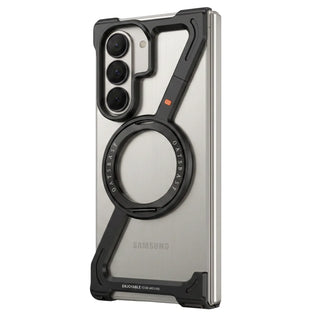
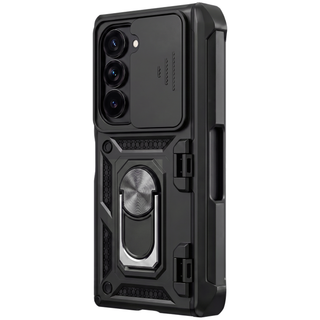
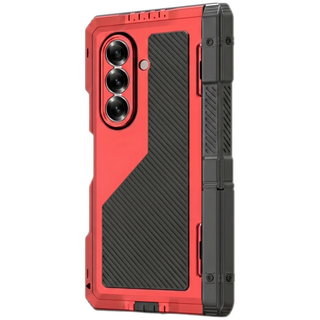
The arrival of foldable phones like the Samsung Galaxy Z Fold and Google Pixel Fold is a massive leap forward for productivity on the job site. Suddenly, you have a device that’s both a phone and a tablet, perfect for pulling up large blueprints or managing a complex project schedule right from your pocket. But this incredible technology comes with a critical weakness that standard cases are completely blind to: the hinge.

Think of the hinge as the spine of your device. It's the mechanical heart that makes the whole thing work, but it’s also the most fragile and exposed component. On a construction site, that intricate mechanism is under constant attack from threats that can take it down in an instant.

The Unseen Danger to Your Hinge

The biggest enemy of a foldable’s hinge isn't some dramatic, ten-foot drop. It’s the tiny, gritty particles that float in the air on every single job site. We’re talking about sawdust, drywall dust, concrete grit, and microscopic metal shavings. These things are relentless. They can easily find their way into the tight tolerances of the hinge mechanism, acting like sand in a finely tuned set of gears.

Once that debris gets inside, it can unleash a whole host of catastrophic problems:

  • Grinding and Stiffness: You might start to notice a gritty, rough feeling when you open or close your phone. That’s the sound of tiny particles grinding away at delicate internal parts.
  • Restricted Movement: Over time, that buildup of gunk can cause the hinge to stiffen up, making it a struggle to open or close the device all the way.
  • Complete Mechanical Failure: In a worst-case scenario, one larger piece of grit or just too much dust accumulation can jam the mechanism completely. That means a permanent failure and a seriously expensive repair bill.

This is a problem that a typical phone case for construction workers just wasn't built to solve. Most cases designed for foldables leave the hinge totally exposed when the device is closed, offering absolutely zero defense against impacts or dust getting inside.

For a foldable phone, an unprotected hinge is an open invitation for job site debris to enter and destroy the most crucial part of the device. Protecting this component is just as important as protecting the screen.

How Specialized Hinge Protection Works

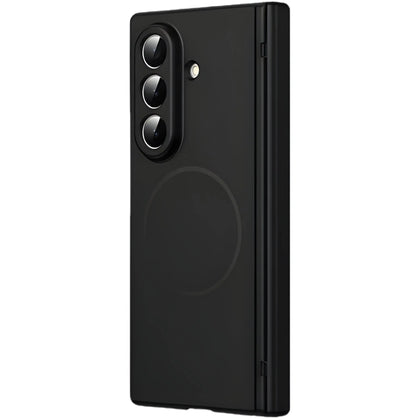
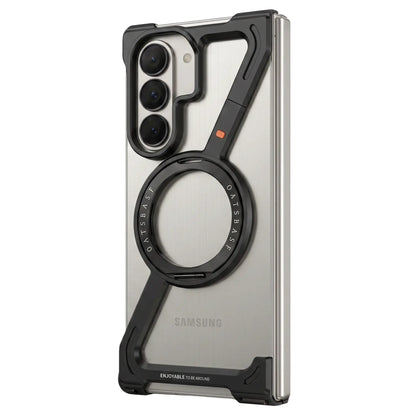
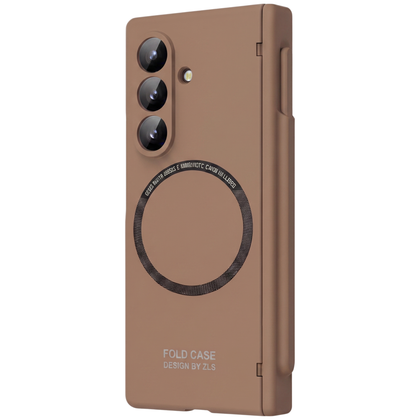
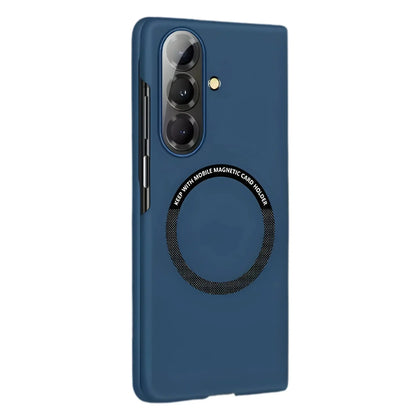
Real protection for a foldable phone demands a case with dedicated, full-coverage hinge protection. This isn’t just some cheap add-on; it’s a non-negotiable feature that acts as an armored shield for the device's spine. FoldifyCase engineers its rugged cases with this exact threat in mind, creating a sealed enclosure that safeguards the hinge no matter what position it’s in.

This specialized shield physically blocks dust and debris from ever getting near the internal mechanism, whether your phone is open on a tailgate or closed up in your pocket. Even better, it provides critical impact absorption for the hinge itself—a detail standard cases completely overlook. If you drop your phone and it lands right on that hinge, this protection is the difference between a minor scuff and a major mechanical breakdown. To get a better sense of this crucial feature, you can learn more about why a foldable phone needs foldable protection in our detailed guide.

Choosing a case without integrated hinge defense is like buying a work truck with no doors. Sure, it might get you from point A to B for a little while, but it leaves you dangerously exposed to the very elements you face every day. For any construction professional who has invested in cutting-edge foldable tech, making sure that hinge is fully armored isn't a luxury—it's an absolute necessity to keep your most valuable tool in the game.

Practical Features for On-the-Job Usability

A phone case can boast world-class drop ratings, but if it turns your phone into a slippery, frustrating brick, it’s useless as a tool. Real on-site protection isn't just about surviving a fall—it’s about how the case performs in your hand, second by second. The day-to-day usability of a phone case for construction workers is what truly separates a good design from a great one.

Imagine trying to answer a call from the project manager while wearing thick work gloves, but the volume buttons are too smooth to feel. Or picture trying to pull up a blueprint with dusty hands, only to have your expensive device slide right out of your grip. These little frustrations add up, costing you time and raising the risk of an accident.

A construction worker in gloves uses a phone with a sturdy, glove-friendly grip case, while talking on another phone.

The Critical Importance of Grip

Grip is everything. Seriously. A secure hold is your first and best line of defense against drops. A smooth, slick case is a major liability on a job site, where your hands are often covered in dust, sweat, or wrapped in bulky gloves.

An effective design has to actively fight against slippage. This isn't just about the material; the physical shape and texture of the case are just as important.

  • Textured Edges: Deep grooves, ridges, or a knurled pattern along the sides give your fingers something to actually grab onto, creating much-needed friction.
  • Rubberized Materials: Materials like TPU (Thermoplastic Polyurethane) naturally have a tackier, "grippier" feel than hard plastic, stopping the phone from sliding around.
  • Ergonomic Contours: A case that’s subtly shaped to fit the curve of your hand makes for a more natural hold, which means less hand fatigue after a long day.

When these features work together, your phone stays exactly where it belongs—firmly in your hand.

Functionality with Gloves On

Let's be real: construction work rarely happens with bare hands. Any case you choose absolutely must be fully functional while you’re wearing standard work gloves. This all comes down to the design of the physical buttons.

A great work-ready case will feature oversized, tactile buttons that provide a satisfying "click" you can feel, even through a layer of leather or fabric. Mushy, flush-mounted buttons are a recipe for frustration, forcing you to constantly take your gloves off for simple tasks.

This glove-friendly mindset extends to the screen, too. While your phone’s touch sensitivity is key, a case with a raised bezel provides a physical reference point, helping you orient your fingers on the screen without having to look down. It’s a small detail that makes a massive difference in workflow.

Accessibility and Secure Portability

Finally, your phone needs to be easy to get to but also securely out of the way. Shoving a bulky phone into a pants pocket isn't just uncomfortable—it's asking for trouble. This is where belt clips and holsters become essential gear.

A high-quality holster does more than just hold your phone; it protects it while keeping it right at your hip for quick access. Look for a robust clip that locks securely onto your tool belt and lets you unholster the phone with one hand. Some systems even offer a rotating clip, so you can adjust the angle for comfort whether you’re standing, kneeling, or climbing a ladder.

Ultimately, a case's usability is the bridge between its toughness and your real-world job. A design that prioritizes grip, tactile feedback, and secure portability, like those from FoldifyCase, transforms your phone from a fragile piece of tech into a reliable tool you can count on every day.

How to Inspect and Maintain Your Phone Case

On a job site, your rugged case is just as much a piece of Personal Protective Equipment (PPE) as your hard hat or steel-toed boots. You wouldn't start a shift with a cracked helmet or a frayed safety harness, right? Your phone case deserves that same level of respect.

A quick, regular inspection is the only thing standing between your phone and a disastrous impact. Think of it as preventative maintenance. Spending a few minutes each week checking your gear ensures that the initial investment in a quality phone case for construction workers keeps paying you back for years.

Your Weekly Inspection Checklist

Set aside a minute once a week—maybe Friday afternoon before you clock out—to pop your phone out of its case and run through this quick, five-point check. It's a simple habit that can save you hundreds of dollars in repair costs.

  1. Check for Stress Fractures: Hold the hard outer shell up to the light and examine it closely. Pay special attention to the corners and around the port cutouts. Even a tiny hairline crack can completely compromise the case's structural integrity on the next drop.

  2. Inspect the Inner Layer: Now look at the soft, rubbery TPU layer inside. Has it become permanently compressed, torn, or started peeling away from the hard shell? This layer is your phone's cushion, and it needs to be in prime condition to absorb shock.

  3. Test the Port Covers: Open and close each port cover. They should snap shut with a firm, tight seal. If a cover feels loose, flimsy, or won't stay closed, it's no longer doing its job of blocking out sawdust and moisture.

  4. Examine the Bezel: Run your finger along the raised lip that borders the screen and the camera lenses. Make sure it isn’t worn down, chipped, or flattened out. That bezel is the only thing keeping your glass from grinding against abrasive surfaces when you set it down.

  5. Look at the Buttons: Press each button on the side of the case. They should feel clicky and responsive, not mushy or stuck.

Proper Cleaning for Longevity

A dirty case isn't just about looks. Grit and grime trapped inside can act like sandpaper, slowly scratching up your phone's finish. A simple cleaning routine gets rid of that threat and helps everything last longer.

Over time, fine particles of dust and sand can get trapped between your phone and the case. If left unchecked, the constant vibration and movement can cause these particles to micro-scratch your phone's body and screen.

To clean it the right way, just use a soft, damp cloth with a bit of mild soap to wipe down the inside and outside. For stubborn grime caked in the textured grips or around the port seals, an old toothbrush works wonders.

Always make sure the case is 100% dry before you put your phone back inside. These simple steps keep your case a reliable asset on the job. For a deeper dive into how long protective gear should last, you can learn more about how long phone cases last and the factors that wear them down.

Answering Your Questions

Picking the right gear for a job site can be a headache, especially when it’s for an expensive tool like your smartphone. To cut through the noise, we've gathered the most common questions we hear from construction pros and answered them straight up.

What’s the Single Most Important Feature to Look For?

No question, it’s drop protection. Your work environment is pure chaos—you’re up on ladders, walking over rebar, and surrounded by heavy gear. Drops aren't a "what if," they're a "when."

The gold standard here is MIL-STD-810G certification. This isn't just some marketing fluff; it's proof that the case was repeatedly dropped from at least four feet onto solid concrete and survived. A case with that rating, plus reinforced corners and a shock-absorbing inner layer, gives your phone its best shot at surviving the daily abuse of a job site.

Does a Case for Construction Really Need to Be Waterproof?

Absolutely. "Waterproof" might sound like overkill, but your phone is constantly under threat from moisture. Think about sudden downpours, wet concrete, pressure washing, or even just sweat and humidity. Over time, that stuff kills electronics.

An IP68 rating is what you want. It means the case is certified to be completely sealed against dust and can handle being fully submerged in water. When you combine that with port covers that keep dirt and debris out, an IP68-rated case wraps your device in a full environmental shield. It protects against both the big accidents and the slow, creeping damage from moisture.

Your phone's built-in "water resistance" is just a last resort, not a daily defense. A sealed, IP68-rated phone case is the professional-grade protection you need to keep the elements out for good.

Can a Heavy-Duty Case Still Work with Wireless Charging?

Yes, but you have to pick the right one. This is a classic trade-off. Some of the super-thick, multi-layer cases are just too bulky and interfere with the magnetic field needed for wireless charging to work.

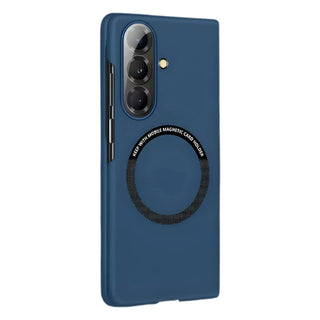
However, a lot of modern rugged cases are now designed to be fully compatible. At FoldifyCase, for example, we engineer our protective models to deliver job-site toughness without forcing you to give up modern conveniences. Just make sure to double-check the product specs for wireless charging compatibility before you buy. That way, you get maximum protection without losing the ease of just dropping your phone on a charger at the end of a long day.

How Much Should I Actually Spend on a Good Case?

For a real, high-quality phone case for construction workers, you should plan on investing between $50 and $100. I know it's tempting to grab a cheap "tough" case off Amazon, but the difference in the engineering and materials is night and day.

Think about it like this: you're protecting a tool that costs over $1,000 and is critical for your work. Spending a bit more upfront for a case with certified drop protection, quality materials, and smart features like sealed ports and a solid grip is a no-brainer. It prevents a much more expensive phone replacement and the massive headache of being without your device. A good case pays for itself the first time it saves your phone from a nasty fall.


Protecting your most valuable tool on the job site isn't optional. FoldifyCase delivers the specialized, military-grade defense your foldable phone needs to survive demanding environments, keeping it secure day in and day out.

Discover the ultimate protection for your device at FoldifyCase

Built for foldables

Shop FoldifyCase foldable phone cases

Precision cases for Galaxy Z Fold & Z Flip — full MagSafe, S-Pen ready, zero bulk.

Shop FoldifyCase

Leave a comment

Please note, comments need to be approved before they are published.