

Z Fold 8 vs iPhone Fold — Case Designer Diff
 Editorial

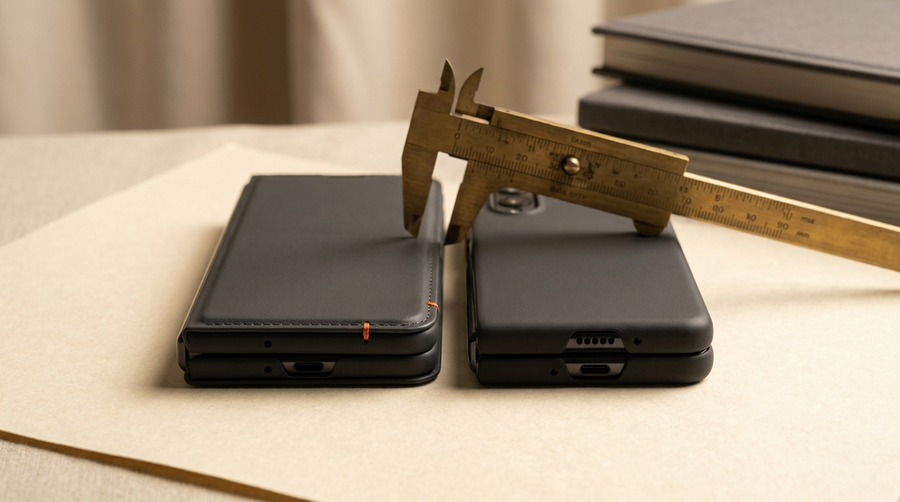
What this is: a case designer's diff — not another spec-sheet showdown. We design and sell cases for the Galaxy Z Fold (and, from late 2026, the iPhone Fold), so we read these two devices the way a tooling engineer reads a CAD file: where's the camera bump, how thick is the spine, what does the hinge do, and can we actually protect it on day one. Every other Z Fold 8 vs iPhone Fold comparison stops at "which has the better camera." This one answers the question a buyer who plans to keep the phone for three years actually has: which of these can you wrap in real protection the week it ships — and which one leaves a A$2,000-plus folding screen naked for months. Last updated: 22 June 2026.
Two leaks are doing the rounds: the Galaxy Z Fold 8 lands first (rumoured 22 July, London), and the iPhone Fold — increasingly briefed as the "iPhone Ultra" — follows in September. Same price tier, same target buyer, opposite philosophies. We're not here to relitigate Samsung's eight generations versus Apple's first attempt. We're here to tell you what changes when you put these two side by side on a workbench, and what it means for keeping the thing alive.
The diff: Galaxy Z Fold 8 → iPhone Fold
Read this as a changelog from the Z Fold 8 baseline to the iPhone Fold. Specs are leaked, not confirmed — treat them as direction, not gospel. The column that matters to us is the last one: what each difference does to case design.
| Spec | Galaxy Z Fold 8 | iPhone Fold | Status | What it means for a case |
|---|---|---|---|---|
| Launch | ~22 Jul 2026 | ~Sep 2026 | CHANGED | Z Fold 8 cases ship at launch; iPhone Fold cases get engineered after teardown |
| Folded thickness | ~9.0mm | ~9.2–11mm (conflicting) | CHANGED | A thicker, less-settled chassis is harder to tool a slim case for early |
| Unfolded thickness | ~4.5mm | ~4.5mm | UNCHANGED | Both unfold paper-thin — both need a back panel that adds zero flex resistance |
| Cover screen | 6.5" | 5.49" (4:3) | CHANGED | Different cutout geometry; a Fold 8 case front frame won't map to the iPhone |
| Crease | Reduced (dual-layer UTG + metal plate) | Rumoured near-invisible | CHANGED | A flatter inner panel changes nothing for the case — the spine is still the failure point |
| MagSafe | Via case only | Built-in | NEW | The single biggest case-design difference — see below |
| Main camera | 200MP (1/1.3") | 48MP | CHANGED | Bigger sensor = bigger bump = deeper camera lip on the Samsung case |
| Telephoto | 10MP 3x optical | None | REMOVED | One fewer lens cutout to seal on the iPhone |
| Biometrics | Side fingerprint + face | Touch ID power button | CHANGED | The iPhone's side button reader forces a precise side-rail cutout — no rubber flap |
| S Pen | Rumoured return | Not supported | REMOVED | If S Pen returns, Samsung cases can carry a stylus loop; the iPhone case can't |
| Hinge material | Carbon-fibre-reinforced plastic | Liquidmetal alloy (rumoured) | CHANGED | Different spine width and travel — hinge covers are never cross-compatible |
| Generation | 8th | 1st | CHANGED | A mature body means stable tolerances; a first-gen body can shift before release |
Will any FoldifyCase Galaxy Z Fold case fit the iPhone Fold?
No — and not by a small margin. This is the one part of the comparison no spec table will tell you. A Galaxy Z Fold case is tooled around the Fold's exact spine width, hinge travel, button placement, and a tall ~6:5 footprint. The iPhone Fold is a wider, squarer 4:3 device with a different hinge, a power-button Touch ID reader, and no S Pen channel. Nothing carries over. A case that "almost fits" a folding phone is worse than no case, because it can bridge the hinge and stop the fold from closing flush — which is exactly how you crack a spine.
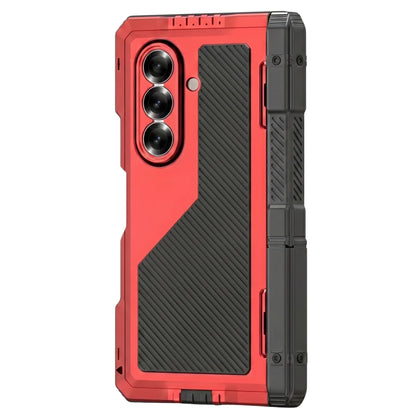
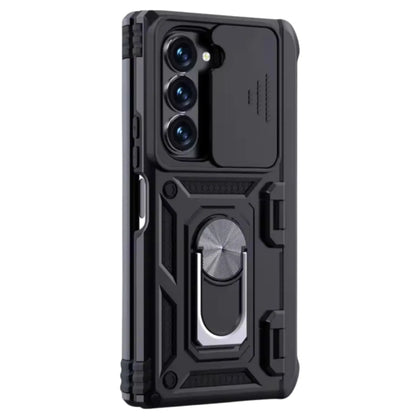
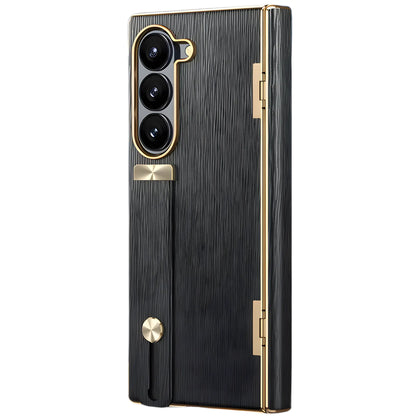
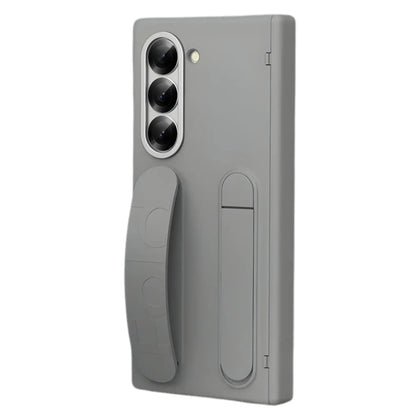
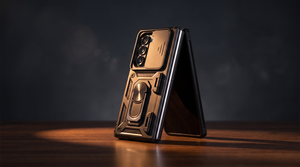
So if you buy the iPhone Fold at launch, you are protecting a roughly A$2,000-plus folding display with whatever thin first-wave cases exist in September — and good first-wave foldable cases are rare, because the category has to be re-engineered from a teardown every single generation. If you buy the Z Fold 8, you inherit eight generations of established tooling. Our Galaxy Z Fold line — like the Vanguard H1 MIL-STD-810H rugged case for full hinge-and-corner protection, or the Halo M1 aluminium MagSafe case for a slim metal profile — moves to the Z Fold 8 footprint on a known geometry, not a guess.
The MagSafe line — the one real designer's difference
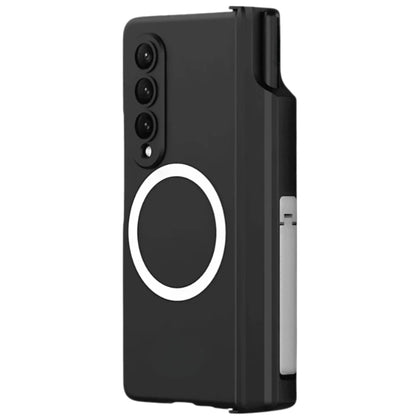
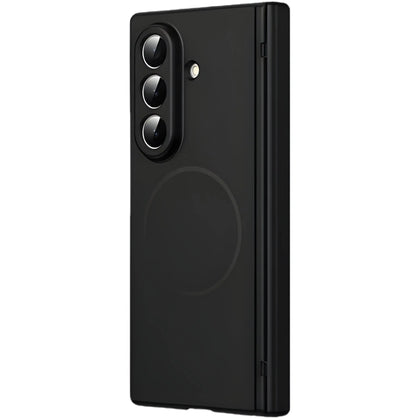
Strip away the camera-megapixel noise and there's exactly one difference that changes how you'll live with these phones: magnets. The iPhone Fold has MagSafe built into the chassis, so chargers, mounts and wallets snap to the bare phone. The Z Fold 8, like every Samsung foldable, has no native magnet array — you add MagSafe through the case. That sounds like a Samsung loss. In practice it's a wash, and arguably a Samsung win on flexibility: a MagSafe case such as the Sync M1 MagSafe hinge case gives you the same snap-on ecosystem and adds hinge protection the bare iPhone won't have. Native magnets mean a thinner stack; a case-based magnet array means you choose whether to carry the magnets at all. Either way, on a Samsung foldable the magnets and the protection arrive in the same part — which is the efficient way to do it on a device whose weakest point is the spine, not the back glass.
So: buy, or wait?
If you're already deep in iCloud, AirPods and a Mac, and a near-creaseless panel is the feature you'd trade everything for, the iPhone Fold is the obvious pull — just go in clear-eyed that you'll baby a first-generation folding screen through a thin-case launch window. If you want the device you can fully kit out on day one — case, hinge guard, MagSafe, screen protector, S Pen loop if it returns — the Z Fold 8 is the safer keep-it-three-years buy. And if you have no ecosystem lock-in, wait six weeks past the iPhone's September date and read the real-world hinge-durability reports before you spend A$2,000.
Frequently asked questions
Will an iPhone Fold case fit the Galaxy Z Fold 8 (or vice versa)?
No. The two devices have different footprints (the iPhone's 4:3 square versus the Fold's tall ~6:5), different hinges, different button layouts and different camera islands. No foldable case is cross-brand compatible — a near-fit case can jam the hinge and crack the spine, so always buy a case tooled for your exact model.
Does the Galaxy Z Fold 8 have MagSafe?
Not natively. Samsung foldables don't ship with a built-in magnet array, so MagSafe is added through a MagSafe-compatible case. The upside is you get the magnets and hinge protection in one part, and you can choose a non-magnetic case if you'd rather skip them. The iPhone Fold is expected to have MagSafe built in.
Which folding screen is easier to protect at launch?
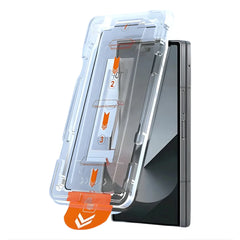
The Galaxy Z Fold 8. It's the eighth generation of an established footprint, so cases, hinge guards and screen protectors are tooled and available the week it ships. The iPhone Fold is a first-generation device — third-party cases have to be engineered from a teardown, so expect a thin, slow first wave through late 2026.
Is the crease difference a reason to skip a case?
No. A flatter inner panel is nice to look at, but the crease has never been the part that fails — the hinge and the spine are. Out-of-warranty hinge repairs run upward of A$450, so a hinge-protecting case matters far more than how invisible the fold line looks.
Our verdict
From a case designer's bench, the Z Fold 8 wins the part of this fight that the spec tables ignore: it's the one you can actually protect on launch day. The iPhone Fold may deliver the prettier unfolded panel and native MagSafe, but it's a first-generation folding screen entering a market with almost no cases engineered for it — and a A$2,000 foldable you can't properly armour for months is a risk, not a flex. Choose the iPhone for the ecosystem and the crease; choose the Z Fold 8 if you want the device that's protectable, kitted-out and proven from the first week. Either way, never run a foldable naked — the hinge doesn't forgive it.
Related Galaxy Z Fold guides
- Galaxy Z Fold 7 → Z Fold 8: a case designer's diff (and what will still fit)
- Best Galaxy Z Fold 8 cases (2026): the pre-launch buyer's guide
- The best iPhone Fold cases: what to look for (and get notified at launch)
- When do Galaxy Z Fold 8 pre-orders open — and when should you buy the case?
- Galaxy Z Fold 8 vs Galaxy S26 Ultra: a case designer's diff
Frequently asked questions
Will there be cases for the iPhone Fold at launch?
Not immediately. Apple's first foldable would need teardown measurements before real cases exist, whereas the Galaxy Z Fold 8 will have a full case ecosystem from day one.
Can a Galaxy Z Fold 8 case fit an iPhone Fold?
No. Different dimensions, hinge and camera layout mean no case carries across. Each needs its own mould.
Which foldable is easier to protect early on?
The Galaxy Z Fold 8. Samsung's mature foldable ecosystem means model-specific cases, screen protectors and accessories are ready at launch.
Does FoldifyCase make iPhone Fold cases?
We're a Samsung and Android foldable specialist and are evaluating an iPhone Fold line - join the waitlist on our iPhone Fold guide to register interest.

Our top pick · Galaxy Z Fold 7
Halo M1
$79.99
Shop the Halo M1 →Browse all 21 Galaxy Z Fold 7 casesCases engineered
for the fold.
10 foldable-specialist designs — magnetic, hinge-cover, slim & S-Pen — each moulded to your exact model, not adapted from a slab-phone case.
Shop all 10 cases